
CAPACITY COMPARISON · UK 2026
10L vs 12L Dehumidifier: Which Size Is Right for Your Home?
Quick answer: For most small UK bedrooms and box rooms with light-to-moderate condensation, a 10L dehumidifier is usually enough. Choose 12L if the room is larger, humidity is persistent, or you dry laundry regularly. For two popular 12L models, read our Meaco Arete One vs Pro Breeze OmniDry comparison. The jump from 10L to 12L is modest, so room conditions and moisture load matter more than the litre number alone.
Not sure which capacity fits your room? Open Dehumidifier Size Calculator →
The 10L and 12L figures describe rated daily extraction under specified test conditions, not the volume a machine will always remove in a typical UK room. For example, Meaco’s published Arete One data at 20°C and 60% RH lists 4.34L/day for its 10L model and 5.23L/day for its 12L model, with both listed at 151W under those conditions. The litre label alone therefore cannot tell you real-room yield or electricity costs. Source: Meaco Arete One 10L official specifications and Meaco Arete One 12L official specifications. For electricity bills, wattage, thermostat or humidistat cycling and hours of use matter more than the capacity label; try our dehumidifier running cost calculator with your own tariff.
Quick Comparison
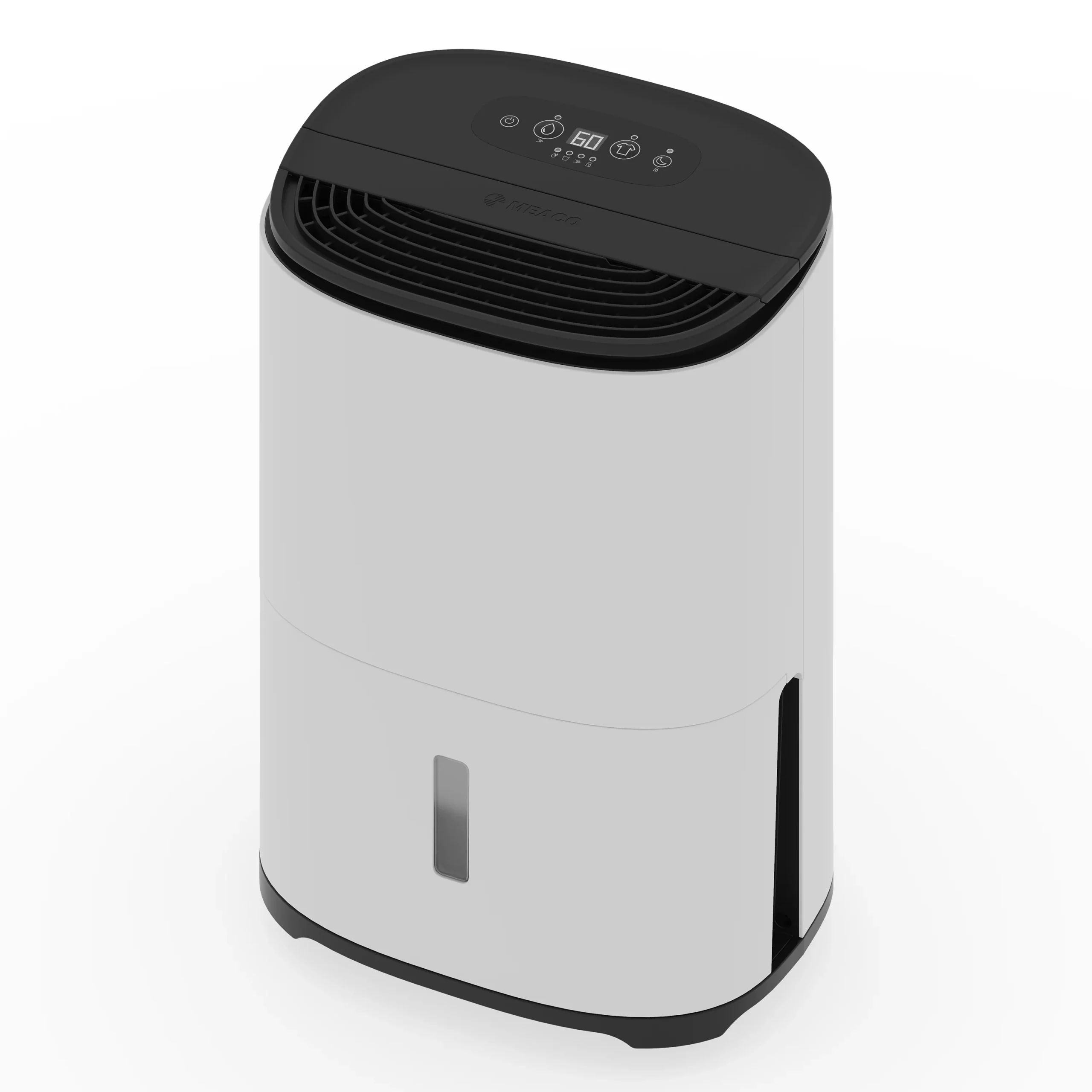
10L Dehumidifier
A compact choice for bedrooms, smaller flats and lighter condensation problems. It can make sense when space, lower upfront cost and easy portability matter most.
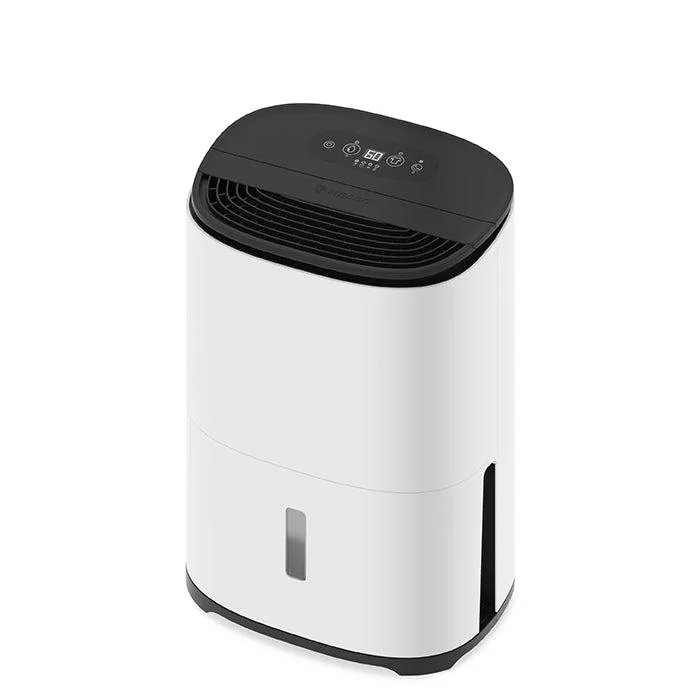
12L Dehumidifier
A little more extraction headroom for larger rooms, heavier condensation or more regular laundry use, while still staying in the compact household category. If you may need more capacity than 12L, compare the trade-offs in our 12L vs 20L dehumidifier guide.
10L vs 12L at a Glance
Typical room use
Moisture load
Laundry
Portability
Value
10L
Bedrooms, box rooms, smaller flats
Light to moderate
Good for occasional small loads
Usually very compact and easy to move
Often lower purchase price
12L
Bedrooms, small to medium rooms, flats
Moderate, with a little more capacity in reserve
More useful for regular indoor drying
Still compact, though often slightly larger
Often a small price step up for extra capacity
Which Size Fits Different Situations?
Small bedroom
A 10L unit can be a sensible fit when the room is small and the main issue is overnight condensation or general humidity.
One-bedroom flat
Either size can work. A 12L model gives a little more headroom if you move it between rooms or regularly dry clothes indoors.
Indoor laundry
For frequent indoor laundry, compare the actual extraction figures at the same temperature and humidity, laundry settings, noise and running costs. A suitable 12L model may offer extra extraction headroom, but capacity alone does not guarantee faster drying.
Seasonal condensation only
If the problem is mild and mostly appears in colder months, a 10L model may be enough for a small area without paying for extra capacity you may rarely use.
How to Decide Between 10L and 12L
What 10L and 12L actually mean: The litre rating is the amount of water a model can extract in 24 hours under specified test conditions, not a guarantee of that extraction in a UK bedroom. Actual performance changes with room temperature, relative humidity and the technology used. When comparing two models, check their published test conditions and, where available, extraction at the same temperature and humidity.
The 2-litre difference is useful, but it should not be the only factor. Compare exact model noise, wattage, tank size, controls, drainage options and the room conditions where you will actually use it. For specific 12L options, see our Meaco Arete One 12L vs Pro Breeze OmniDry 12L comparison. For a wider shortlist, see our best dehumidifiers UK guide.
Choose around 10L if
Your space is small, moisture is moderate, laundry use is occasional and compact size or lower upfront cost matters most.
Choose around 12L if
You want more capacity for regular laundry, a slightly larger area or heavier condensation without moving up to a much larger 20L class.
Frequently Asked Questions
Is a 12L dehumidifier much better than 10L?
It gives some extra extraction capacity, but the practical difference may be modest in a small room. Model quality, humidity controls, noise and power use can matter just as much.
Is a 10L dehumidifier enough for a bedroom?
Often yes for a typical small bedroom with moderate condensation, although the right size depends on room conditions and the exact product.
Which is better for drying clothes?
A 12L model usually has the advantage because laundry creates a higher moisture load. For frequent or large loads, you may also want to compare 20L models.
How We Build This Comparison
This is a category-level guide rather than a comparison of two specific products. We use manufacturer-published figures, not hands-on testing. Extraction and wattage must be compared under the same temperature, humidity and operating mode where possible. Figures and models can change; confirm the exact product documentation before purchasing. For a room-specific starting point, try the Airmestra Home Problem Solver, then use the linked calculators to explore sizing and running-cost assumptions.