
CAPACITY COMPARISON · UK 2026
12L vs 20L Dehumidifier: Which Size Suits Your Home?
Quick answer: Choose a 12L dehumidifier for bedrooms, smaller flats and moderate condensation. Choose a 20L dehumidifier for larger rooms, heavier moisture or frequent indoor laundry. If both could work, 12L usually wins on size and upfront cost, while 20L gives you more extraction headroom.
Need a quick size recommendation? Open Dehumidifier Size Calculator →
A 12L and a 20L dehumidifier can both work well in UK homes, but they suit different moisture loads, room sizes and laundry needs. If you are also comparing smaller capacities, see our 10L vs 12L dehumidifier guide. For a broader shortlist across different capacities, see our best dehumidifiers UK guide. This guide explains the practical trade-offs without assuming that a bigger number is automatically better. If you are leaning towards a compact 12L model, our Meaco Arete One 12L vs Pro Breeze OmniDry 12L comparison examines two specific options.
Quick Comparison

12L Dehumidifier
Usually the more compact option. It can suit bedrooms, smaller flats and moderate condensation where you value lower purchase cost, easier placement and lighter everyday use.
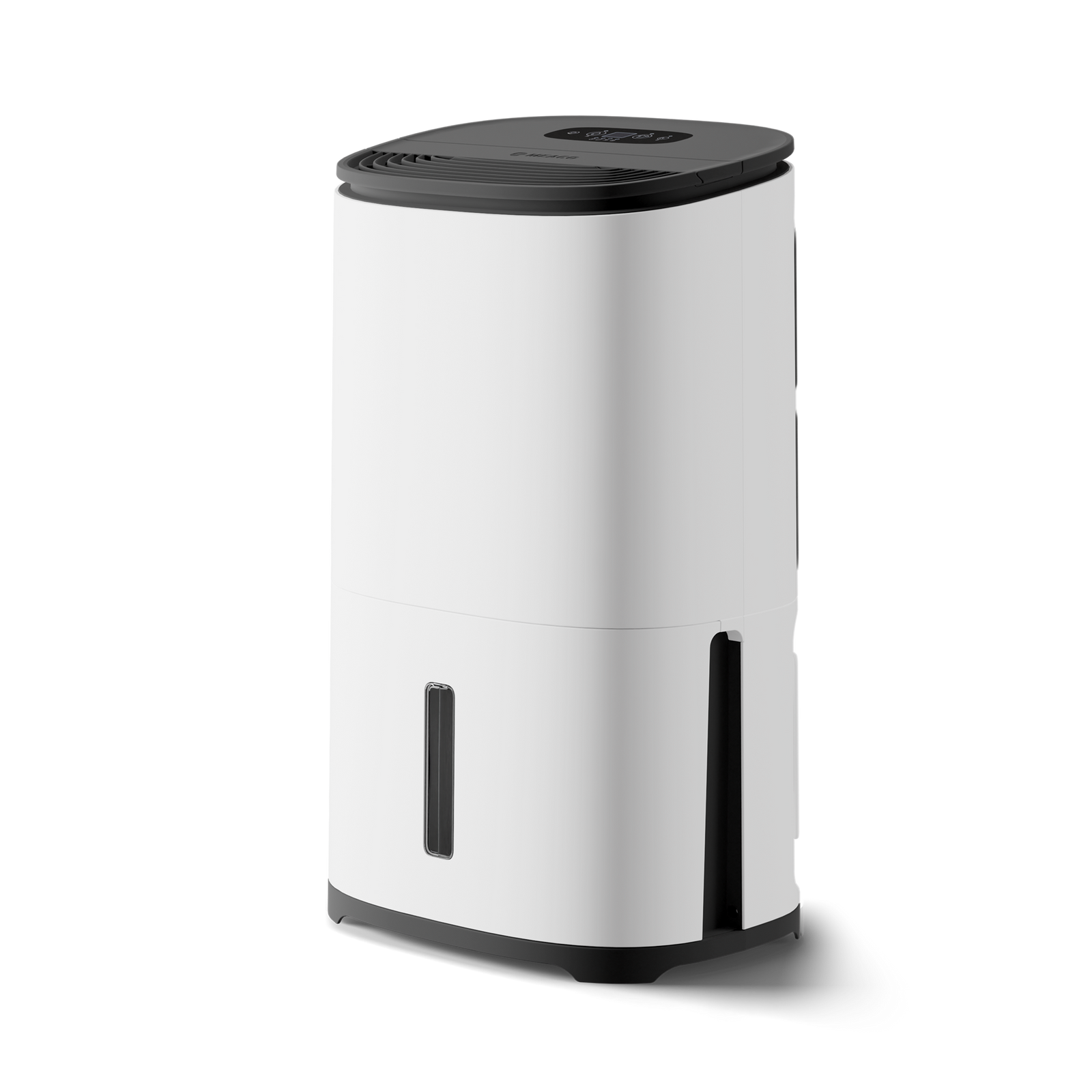
20L Dehumidifier
Usually better suited to heavier moisture loads, larger rooms and frequent indoor laundry. The trade-off can be a larger cabinet, higher purchase price and potentially higher power draw depending on the model.
12L vs 20L at a Glance
Typical use
Moisture load
Laundry
Size & portability
Running cost
12L
Bedrooms, small flats, smaller living areas
Light to moderate
Useful for occasional indoor drying
Often smaller and easier to move
Often lower, but check the exact wattage and runtime
20L
Larger rooms, busier homes, broader moisture control
Moderate to heavier
Usually better for frequent or larger laundry loads
Often larger and heavier
Can be higher per hour, though faster moisture removal may reduce runtime
12L vs 20L Dehumidifier: Which Size Should You Buy?
Small flat or bedroom
A 12L model is often easier to place and can be sufficient when the main problem is window condensation or general humidity in a smaller space.
Drying clothes indoors
A 20L model usually gives you more extraction headroom when you dry laundry frequently, especially in a closed room with a full clothes airer.
Larger or open-plan room
A 20L unit is generally the more practical starting point because it has more capacity available when the moisture load rises.
Occasional damp or seasonal condensation
A 12L model may be enough if the problem is moderate and you are treating one smaller area rather than trying to manage a whole home.
Choose by Moisture Load, Not Litres Alone
The 12L or 20L figure is measured under specified test conditions and does not mean a unit will remove that exact amount every day in your home. Temperature, humidity, room size, airflow and how often doors are opened all affect real-world performance.
A 12L model may fit you if
You live in a smaller home, mainly want help with condensation or moderate damp, dry laundry only occasionally and prefer a compact unit.
A 20L model may fit you if
You have a larger space, heavier moisture problems, frequent laundry loads or want more capacity in reserve for wetter periods.
Frequently Asked Questions
Is a 20L dehumidifier always better than a 12L?
No. A 20L unit can provide more extraction headroom under suitable conditions, but it is not automatically the better choice for a small room. Compare the exact models’ extraction rates at the same test temperature and humidity, noise, dimensions and power consumption.
Is 12L enough for drying clothes?
It can be, particularly for smaller loads in a closed room. If laundry drying is frequent or the loads are larger, a 20L model usually provides more useful capacity.
Does a 20L model always cost more to run?
Not necessarily in total. It may draw more power per hour, but if it reaches the target humidity faster it may run for less time. Compare wattage, control logic and your expected usage rather than capacity alone.
How We Build This Comparison
This is a category-level guide informed by manufacturer-published specifications and practical room-use scenarios, not hands-on product testing. The 12L and 20L ratings refer to daily extraction under specified test conditions; real-world results depend on temperature and humidity. Check each model’s published test conditions, noise and power figures before buying. For help identifying your room’s moisture problem, try the Airmestra Home Problem Solver.